Data Governance & Automation
Building audit, control, and exception-management systems from zero — SQL, Power Platform, and RPA wired into real operating cadence.
Baltimore, MD
Data Governance & AI Automation Leader — Builder of Systems, Not Just an Operator of Them
In April 2021, I was hired as an analyst and handed a problem with no department attached to it — because it didn't exist. So I built one. Four promotions later, I run it.
4 promotions in 5 years · Built a nationwide data governance function from zero · Architected and shipped a live production AI platform
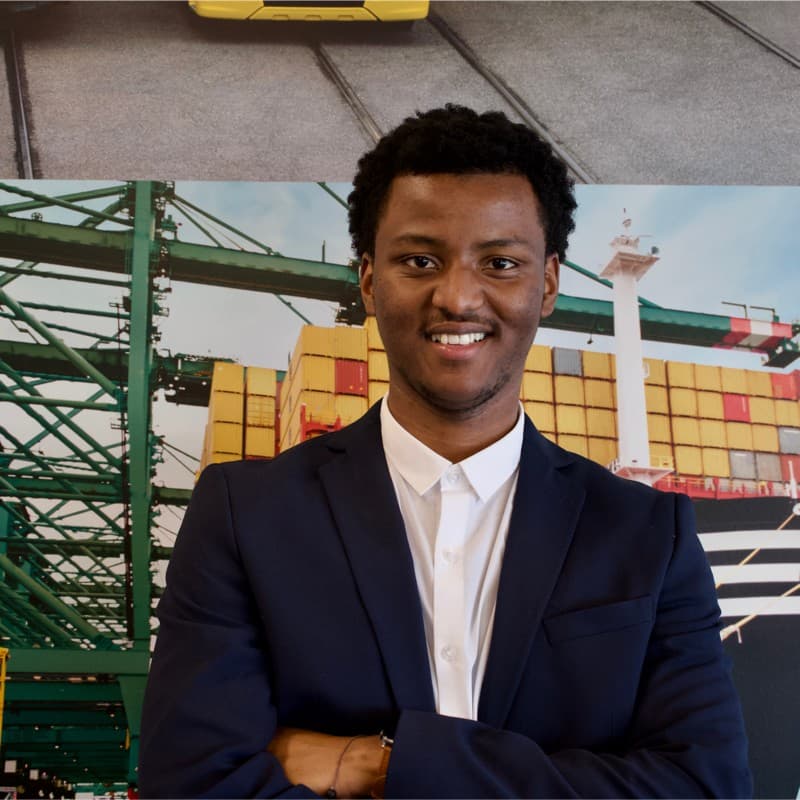
The Story
In April 2021, I was hired as an analyst at one of the world's largest shipping companies and handed a problem that didn't have a department attached to it yet — because it didn't exist.
Equipment and container data across the company's national network was inconsistent, unaudited, and untracked in any structured way. There was no team assigned to fix it. No process to follow. No system to plug into. Just a problem, and me.
So I built the department myself.
I started with SQL — writing the first audit tools and validation logic by hand to find where the data was breaking. From there, I built the governance framework: risk scorecards, exception workflows, escalation paths. Then I built the platform to run it on — a case-management system in Power Apps that could route issues, score severity, and hold an audit trail for everything that happened inside it. What started as one analyst trying to catch errors became the operating infrastructure for a nationwide function.
Four promotions later, I'm the Manager running the department I built from nothing. I lead a team of five, coordinate with more than twenty external vendor and enterprise partners, negotiate contract terms directly with Procurement, and serve as the point of contact for global brands who need real-time visibility into how their cargo moves. Along the way, I taught myself to use AI tools not because anyone asked me to, but because I kept running into problems that manual work couldn't scale to solve — including training a custom AI model to read and extract data from documents that used to require someone doing it by hand.
Most people join a team. I had to build one first, and then earn the right to lead it.
That's the pattern I look for in every problem now: not "what's broken that I can fix," but "what's missing that I should build." It's the reason I'm drawn to roles where the mandate isn't to maintain something that already works — it's to create the thing that doesn't exist yet.
What I Do
Building audit, control, and exception-management systems from zero — SQL, Power Platform, and RPA wired into real operating cadence.
Daily hands-on use of Claude and Cursor to architect and ship production software — including training and deploying custom AI models.
Vendor negotiation, enterprise client relationships, and cross-functional delivery without formal authority — at Fortune 500 scale.
Hires and coaches a team of five analysts — builds the systems, then equips people to run them well. Owns escalations and reports program health directly to C-suite and global HQ.
Selected Work
Flagship Case Study 01
MSC · Nationwide Data AccuracyManager, Nationwide Data Accuracy at Mediterranean Shipping Company. No proprietary screenshots — the system is represented here through outcomes and a genericized workflow.
When I arrived as an analyst, equipment and container data across the national network had no dedicated owner: inconsistent, unaudited, and unstructured. There was no team, no process, and no system — only a mandate to make the data reliable enough for operations and enterprise clients to trust.
I started where the breaks were visible: SQL audit tools and validation logic, written by hand. That surfaced the real shape of the problem, which became a governance framework — risk scorecards, exception workflows, escalation paths — and then a Power Apps case-management platform to route issues, score severity, and preserve an audit trail. One analyst's error-catching work became the operating infrastructure for a nationwide function.
Automation followed the same builder pattern. RPA and Power Automate removed repetitive intervention from exception queues. On the AI side, I trained a custom document model on Azure Form Recognizer so extraction that once required full manual review could run as a controlled pipeline — another place where manual work couldn't scale.
Outside the tooling, the role is enterprise-facing: translating visibility requirements from global brands (including Nike, Costco, and Adidas) into system data flows their teams can rely on; negotiating vendor and depot contracts with Procurement across more than twenty partners, including standing up new depot locations; and reporting program health to C-suite and global HQ.
Ingest
Network events & master data
Validate
Rules, SQL audits, checks
Score
Risk & severity ranking
Route
Exception case assignment
Resolve
Owner action & RPA assist
Audit
Trail, reporting, feedback
Feedback from audit outcomes tightens validation rules — the loop compounds accuracy over time.
The department didn't come with a team — the team was hired and developed as the operating model matured.
Built a team of five analysts in parallel with the governance platform — giving them the tools, workflows, and clarity to own their work rather than waiting on task assignment.
Management approach is enabling: coach people through the hard cases, transfer judgment, and leave them with the capacity to resolve the next exception without escalation by default.
Takes escalations that need authority or cross-org unblock, and reports program health directly to C-suite and global HQ — so the team can stay focused on operating the system.
Flagship Case Study 02
afrinews.appA bilingual (EN/FR) platform covering real-time news and market intelligence across all 15 ECOWAS countries. Live today: news ingestion and country intelligence. In progress: financial market data, economic analytics, and risk tools.
Live · in active development
West African market and political intelligence was fragmented across government bulletins, inconsistent news outlets, and manual research. Nothing connected company data, market data, economic context, and political stability in one place operators could trust.
Architected the system, owned product decisions, and built and maintain the production platform. Directed an AI-agent development workflow — Claude for architecture and planning, Cursor for implementation — reviewing and testing every change before it reached production.
Custom PDF parsing pipeline · bilingual routing via next-intl · Vercel hosting, cron, and AI Gateway
01
Pipeline across 19 sources with cost controls — relevance scored before content reaches the product surface.
02
AI-synthesized political and security summaries that never assert beyond what sources support.
03
Every feature defaults to “unavailable” over guessing — enforced at database, API, and UI layers.
04
Historical market views designed for operators who need signal density without dashboard theater.
Production software is a series of decisions under uncertainty. These are three that shaped Afrinews.
Flagged ambiguity in AI-generated political content, corrected the piece, and tightened the underlying prompt rules so the failure mode couldn’t silently recur.
Rotated every affected secret and independently verified each one in production before closing the incident — no assumed “it should work.”
Shut down a live X/Twitter integration that was burning API cost across all 15 country feeds with no product benefit.
Skills
Governance and automation at the core; full-stack depth from shipping production platforms independently.
The same approach shows up everywhere I work — architecture, ownership, and turning what stakeholders need into working systems.
From data model to deployment, across production systems spanning media intelligence, consulting, and SaaS.
The same skill that runs enterprise client relationships at MSC, applied independently: turning what a client or user actually needs into a working technical build.
Managing the technical and commercial side of external partnerships, from Fortune 500 vendor negotiations to independent client delivery.
Conceiving, architecting, building, and shipping complete systems solo, across multiple domains, not just one lucky project.
Contact